Discovering Kotor, Montenegro: A Window into History and Culture
Estimated Reading Time: 6 minutes
- Discover Kotor’s rich history and architectural beauty.
- Explore the unique geography of the Bay of Kotor.
- Learn about major historical influences, especially Venetian architecture.
- Uncover must-see attractions in the Old Town.
- Plan your visit with practical tips for exploring Kotor.
Table of Contents
- Introduction to Kotor
- Geography and Setting of Kotor
- A Brief History of Kotor
- Attractions in Kotor’s Old Town
- Visitor Information: Planning Your Trip to Kotor
- Practical Takeaways for Recruiters and HR Professionals
- Conclusion
Geography and Setting of Kotor
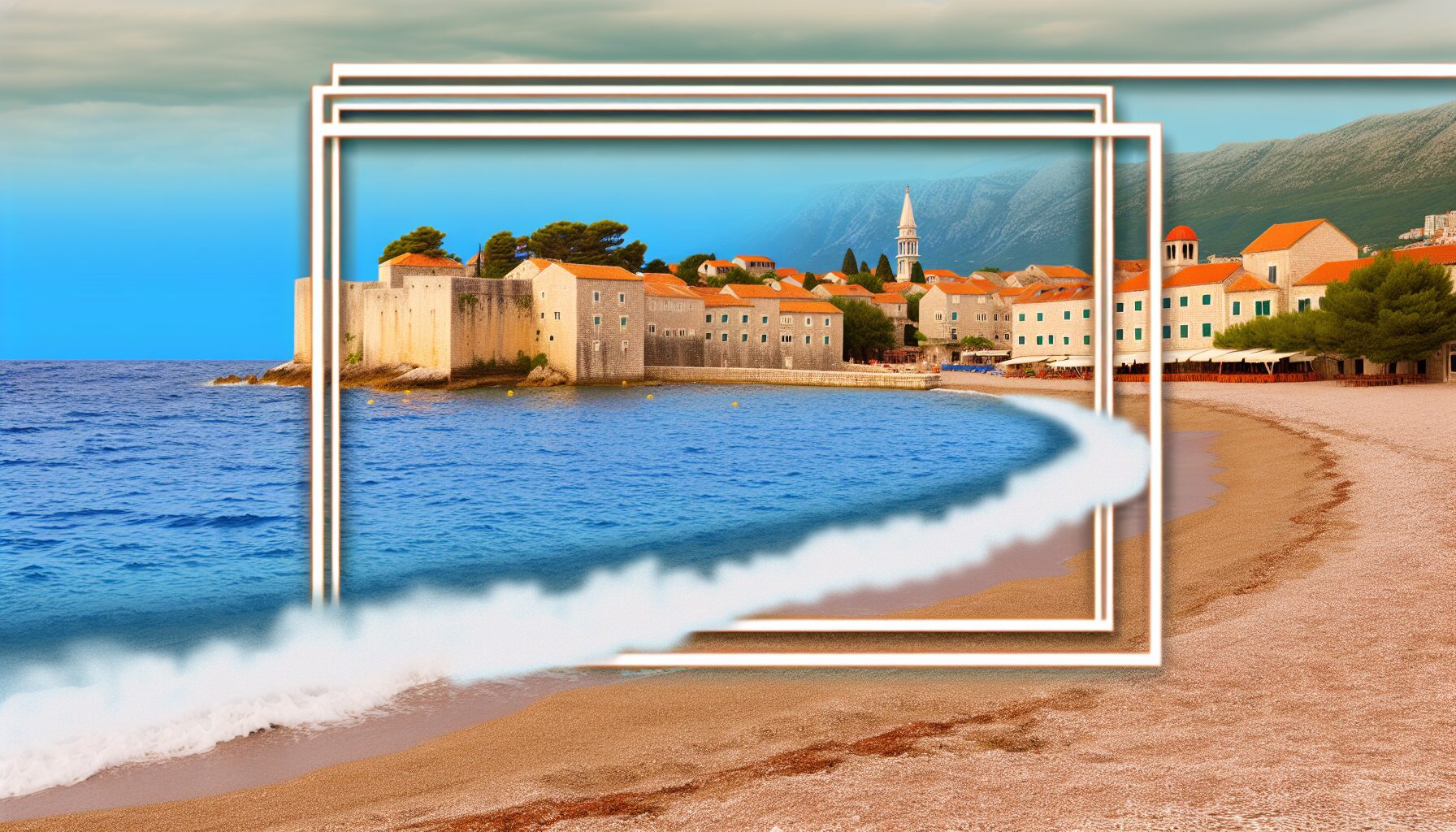
Kotor occupies a striking position on the shores of the Bay of Kotor, often compared to a fjord due to its dramatic scenery and deep natural harbor, framed by steep mountains. This unique geographical feature has not only shaped the town’s aesthetic but also its historical role as a vital maritime hub. The fortified structures of Kotor are harmoniously integrated with the landscape, illustrating the town’s importance in spreading Mediterranean culture throughout the Balkans.
The city walls of Kotor, a remarkable feature stretching over four kilometers, lead up to the fortress of Saint Ivan (or San Giovanni). This formidable fortress was essential in defending the town throughout various historical sieges and conquests. The combination of rugged mountains and historic architecture creates a breathtaking visual panorama that captivates all who visit. For more details, you can find additional insights on TripAdvisor and UNESCO’s World Heritage site.
A Brief History of Kotor
Ancient Beginnings
The history of Kotor spans over two millennia, with its establishment as a Roman outpost that evolved into a significant commercial and artistic center during the Middle Ages. This period was marked by schools of masonry and the introduction of iconography, which played a large role in the region’s cultural development. The town’s strategic location significantly contributed to its growth under the influence of multiple empires; notably, the Byzantine, Venetian, Ottoman, and Austro-Hungarian.
Venetian Influence and Architectural Wonders
From the 12th to 18th centuries, Venice’s influence dominated Kotor, leaving an indelible mark on its architecture and urban layout. The Venetians constructed majestic gates, palaces, and churches, many of which still stand today, demonstrating the enduring legacy of this period. Learning more about Kotor’s architectural heritage can be explored on sources such as World Away from Home and Travelling Trekker.
Restoration and Preservation
A significant turning point in Kotor’s history was the devastating earthquake of 1979, which caused extensive damage to many of its landmarks, including Romanesque churches and city walls. Thanks to UNESCO-led restoration efforts, Kotor has regained its stature as a state-protected site, reflecting a commitment to preserving its heritage for future generations.
Attractions in Kotor’s Old Town
Exploring Stari Grad
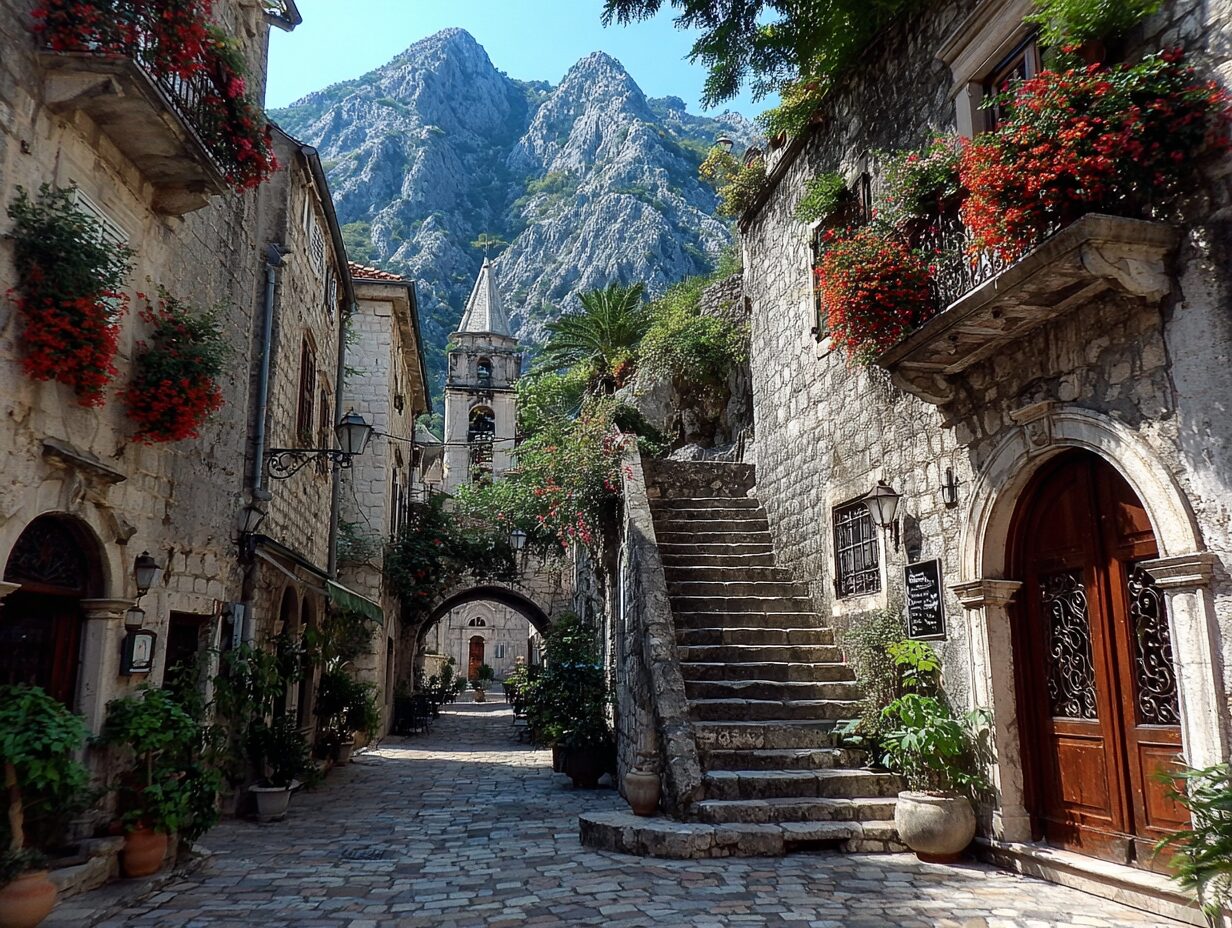
At the heart of Kotor lies the Old Town (Stari Grad), a labyrinth of narrow cobblestone streets, majestic courtyards, and charming cafes. Informal feline residents roam the alleys, adding to the town’s relaxed atmosphere. Entry points to this historic area are marked by three beautiful 16th-century gates:
- River Gate: Crosses the Škurda River and offers views of Kampana Tower and the surrounding walls.
- Sea Gate: The main entrance, leading visitors into the bustling Square of Arms and the iconic Clock Tower.
- South Gate (Gurdic Gate): A picturesque entry featuring a bastion, passageway, and drawbridge.
Noteworthy Sites within the Old Town
Kotor’s Old Town is rich with significant historical sites, including:
- St. Tryphon’s Cathedral: Dating back to 1166, this Roman Catholic church stands as Kotor’s largest religious structure. It has undergone restoration due to earthquake damages.
- Church of St. Mary: Built in 1221, it features preserved medieval frescoes along with remnants of a 6th-century basilica.
- Church of St. Nicholas: This 17th-century Orthodox church is distinctively unfinished, and visitors can climb its tower for stunning views over the bay.
- Grgurina Palace: An 18th-century palace that now serves as a maritime museum, showcasing Kotor’s rich maritime heritage.
Additionally, visitors can embark on the Kotor Fortress hike, which involves a challenging ascent of 1,350 steep steps (known as the Ladder of Kotor) leading to the ruins of San Giovanni Fortress. This trail not only challenges hikers but rewards them with panoramic views of the stunning bay.
The Old Town’s charm and historical richness cater to diverse travelers—from history buffs to lovers of stunning views—making it an unmissable part of any visit to Montenegro. For further insights, check out Sandaltanman and Bucket List Bums.
Visitor Information: Planning Your Trip to Kotor
Kotor is well-equipped to welcome a steady stream of tourists, particularly those arriving via nearby cruise ships. To avoid crowds, it is advisable to explore during off-peak hours. As you wander through the quaint alleys, you’ll find an abundance of Venetian architecture, lively squares, and an array of places to eat and shop.
For additional activities, considering a boat trip around the bay or a visit to the nearby island of Perast, known for its rich pirate history and charming architecture, can round out your Kotor experience. Combining explorations in Kotor with visits to its surroundings showcases the best of Montenegro’s cultural offerings. Insights can be further explored on Celebrity Cruises.
Practical Takeaways for Recruiters and HR Professionals
For HR professionals and recruiters, understanding Kotor’s rich history and geographical significance can inspire innovative approaches to talent attraction and company culture. Here are a few actionable insights:
- Highlight Local Culture: When recruiting, exhibiting an appreciation for cultural heritage can resonate with candidates, especially those showcasing global perspectives.
- Remote Opportunities: Given Kotor’s scenic beauty and appeal, consider promoting flexible remote work opportunities that allow employees to experience such culturally rich environments.
- Collaboration with Local Industries: Connect with local businesses or tourism operations to create internships or dual programs that nurture talent and stimulate local economies.
Conclusion
Kotor, Montenegro, stands as a testament to the intertwined nature of history, architecture, and culture. Its fortified old town, scenic beauty, and rich history position it as a captivating destination for travelers worldwide.
If your company involves international recruiting or seeks to leverage automation via tools like n8n to simplify processes, exploring Kotor’s essence may provide unique perspectives on integrating cultural appreciation into your overall strategy.
For further assistance in streamlining your recruiting process or leveraging AI consulting to improve your workflow automation, reach out to us. Together, we can navigate the complexities of hiring in a global talent market and unlock the potential that lies within your organization. Contact us today to discover how we can assist you!
FAQ Section
Q: What is the best time to visit Kotor?
A: The best time to visit Kotor is during the spring (April to June) and fall (September to October) when the weather is pleasant and the tourist crowds are smaller.
Q: How can I get to Kotor?
A: Kotor can be accessed by car, bus, or ferry. The nearest airport is Tivat Airport, located about 8 kilometers away.
Q: Are there any guided tours available in Kotor?
A: Yes, various guided tours are available, including walking tours of the Old Town and boat tours of the Bay of Kotor.