The best way to travel from Kotor to Dubrovnik depends less on the map distance than on the border. A direct bus is usually the best-value choice for independent travelers, a private transfer is the simplest door-to-door option, and a rental car offers flexibility only if the company permits cross-border travel. The road distance is modest, but queues at the Montenegro–Croatia frontier can turn a straightforward journey into a long one, particularly on summer weekends.
This guide helps you choose between bus, car, private transfer and an organized day trip. It explains which border crossings are normally used, how much time to protect, what documents to check, and when visiting Dubrovnik as a day trip from Kotor becomes too ambitious. Timetables, fares and entry rules change, so use the planning ranges below and confirm your exact departure and documents before travel.
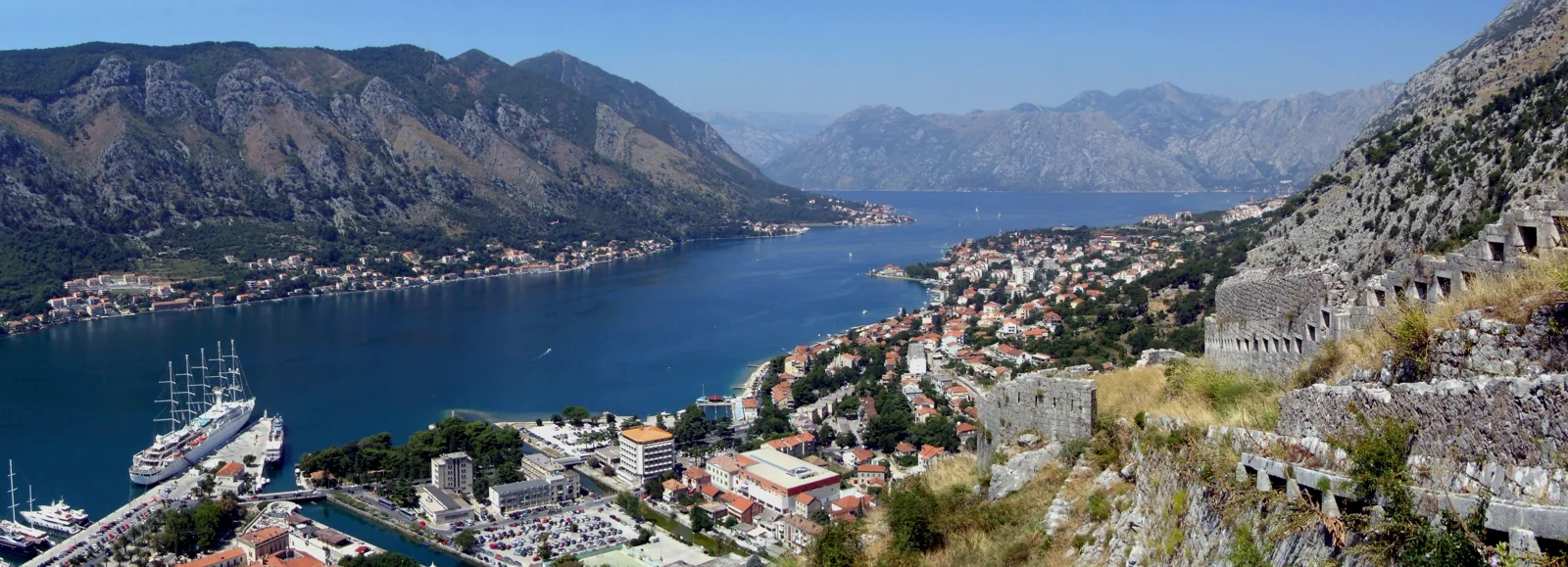

Kotor to Dubrovnik: the quick answer
Choose the bus for price, a private transfer for certainty and luggage convenience, or a car only when you have confirmed border permission and parking. Do not plan around the fastest driving time shown by a map. Add a generous border buffer, and add more in July and August, on weekends, around public holidays and when several coaches reach the frontier together.
- Direct bus: best for solo travelers and couples who want a practical, lower-cost connection without driving.
- Private transfer: best for families, groups, heavy luggage, early flights or travelers who value pickup and schedule control.
- Rental car: best for a wider road trip, not merely for reaching Dubrovnik; cross-border authorization and one-way restrictions matter.
- Day trip: reasonable when you start early and accept border uncertainty; less suitable when a ship call, flight or fixed evening commitment leaves no margin.
- Boat or ferry: do not assume there is a dependable everyday Kotor–Dubrovnik passenger ferry. Treat any advertised seasonal service as date-specific and verify it directly.
If Kotor is your base, start with the Kotor destination guide. Travelers still deciding where to stay can compare the wider Montenegro places hub before committing to an international day trip.
How far is Dubrovnik from Kotor, and how long does it take?
Kotor and Dubrovnik are close enough for a same-day journey, but there is no reliable single travel time because every road option crosses an international border. In light traffic with a quiet frontier, the trip can feel short. In peak season, the same route can take hours longer. Bus schedules show a planned arrival, not a guarantee that border processing will match an ordinary day.
The normal coastal route leaves the Bay of Kotor, passes toward Herceg Novi and continues to the Montenegro–Croatia border. Most through traffic uses the Debeli Brijeg–Karasovići crossing. An alternative crossing at Kobila–Vitaljina may be used in some circumstances, but opening arrangements and vehicle eligibility should be checked rather than assumed. Drivers should follow current official and local traffic guidance, not divert blindly because a navigation app reports a shorter queue.
For planning, separate the journey into three variables:
- Road time: winding bay roads, town traffic and approaches to Dubrovnik.
- Border time: exit controls from Montenegro and entry controls into Croatia.
- Arrival friction: Dubrovnik traffic, the bus station transfer to the Old Town, or finding legal parking.
A useful rule is to avoid booking a flight, cruise departure or non-refundable tour immediately after the scheduled arrival. If missing the connection would be expensive, travel the previous day or use a transfer with a deliberately conservative pickup time.
Taking the Kotor to Dubrovnik bus
The direct bus is generally the most sensible Kotor-to-Dubrovnik option for travelers without a car. It removes rental paperwork and parking, carries you across the border in the same vehicle, and normally costs less than a private transfer. Its weakness is schedule and queue exposure: the coach cannot escape traffic, and all passengers must complete border formalities.
How to plan the bus journey
Check departures for your exact date rather than relying on a blog’s static timetable. Service frequency can differ by season and weekday. Compare the operator’s own information with the departure board or a reputable regional ticket platform, then reconfirm close to travel. If booking online, check whether the ticket must be printed, whether a station fee is payable, and whether hold luggage attracts a small cash handling charge.
Arrive at Kotor bus station early enough to identify the platform and deal with luggage. Kotor traffic can slow even a short taxi ride, especially when cruise visitors and summer road traffic converge. Keep your passport and any supporting immigration documents in your hand luggage, not in the coach hold.
What happens at the border?
The exact process varies. Passports may be checked aboard the coach or passengers may be asked to leave the vehicle. Officials can inspect luggage or request additional documents. Follow the driver’s instructions, keep your boarding document, and do not wander from the group. One passenger’s document issue can delay the entire bus, which is another reason not to build a tight onward connection around the published arrival time.
Where does the bus arrive in Dubrovnik?
Intercity coaches normally use Dubrovnik’s main bus station in the Gruž area, not the gates of the Old Town. From there, continue by local bus or taxi. Allow time for this final transfer when reserving a walking tour or attraction. Dubrovnik’s historic center is pedestrianized, so no road option delivers you directly into its central lanes.
The bus is especially good for travelers who will stay one or more nights in Dubrovnik. It is less attractive as a same-day outing if the return departure is early, because border delay on the outward leg can consume much of your sightseeing window.
Driving from Kotor to Dubrovnik
Driving offers the most freedom but creates the most administrative and parking responsibilities. It makes sense when Dubrovnik is part of a longer Croatia itinerary or when you want to stop around the Bay of Kotor before crossing. It is rarely worth renting a car solely to avoid the bus.
Before taking a rental car across the border
Get written confirmation from the rental company that the vehicle may enter Croatia. Ask whether a cross-border fee applies and which documents the company supplies. Confirm insurance territorial coverage, roadside assistance, and any restriction on returning the car in another country. A one-way international drop-off, when offered, can cost substantially more than returning the vehicle where it was collected.
Do not assume that membership of a regional rental chain means every car may cross every border. The permission attaches to the contract and vehicle. Carry the documents requested by the company along with your valid driving licence, passport and any visa or entry evidence applicable to you.
Our broader driving in Montenegro guide explains local road conditions, rental checks and parking habits. Read it before combining the international leg with narrow bay roads or mountain detours.
Road and fuel planning
The coastal road is scenic but not a fast motorway corridor. Expect curves, settlements, local buses and congestion. Keep enough fuel for delays and do not leave the tank nearly empty while hoping for the next convenient station. Mobile roaming can change at the border, so download maps and save accommodation details offline.
Croatia is in the Schengen Area; Montenegro is not. That is why frontier control remains central to this journey even though both destinations are popular stops on the same Adriatic itinerary. Entry depends on your nationality and circumstances. Consult official government or consular information for your passport rather than copying rules written for another traveler.
Parking in Dubrovnik
Parking is the strongest argument against driving for a simple Old Town visit. Spaces near the historic center are limited and can be expensive, while traffic becomes stressful in summer. Reserve accommodation parking in writing if staying overnight, or choose a designated parking facility and continue on foot or by local transport. Never plan to “find something by the walls” at midday in peak season.
Private transfer or taxi from Kotor to Dubrovnik
A pre-booked private transfer is the easiest option for three or more travelers, families with children, people carrying substantial luggage, and anyone connecting to a flight. It offers accommodation pickup, fewer station steps and control over departure time. The vehicle still waits at the border, so the higher price does not buy immunity from queues.
Ask for a written total price that states whether it includes border fees, waiting, tolls, child seats and pickup outside central Kotor. Confirm the vehicle size and luggage capacity. A low headline quote is not useful if extra cases require a second vehicle.
For an airport connection, tell the provider the flight time—not merely the preferred arrival time—and ask what pickup they recommend for that season. A responsible operator will protect a larger buffer in August than in a quiet winter week. If the quote promises an implausibly precise journey regardless of date, treat that as a warning.
A street taxi and an international transfer are not automatically the same product. For a cross-border ride, use a licensed provider that confirms the international journey in advance and supplies the appropriate passenger and vehicle documentation.
Can you take a ferry or boat from Kotor to Dubrovnik?
Do not build your itinerary around a Kotor-to-Dubrovnik ferry unless a named operator confirms service on your exact date. Search suggestions often include “Kotor to Dubrovnik ferry” and “boat,” but that interest does not prove a daily public route exists. Seasonal excursions and private boats can appear, change or disappear; weather and border formalities also matter.
The Bay of Kotor does have valuable boat experiences, but most focus on the bay, Perast, islands or the Luštica coast rather than functioning as scheduled international transport. Browse the Montenegro experiences hub for local options, and consider a separate visit to Perast instead of forcing it into a border-transfer day.
If you find a boat offer, verify the operating company, departure pier, immigration procedure, luggage allowance, weather cancellation policy and return arrangements. Never infer that a scenic charter can legally land passengers in another country without formal clearance.
Is a Dubrovnik day trip from Kotor worth it?
A Dubrovnik day trip from Kotor is worth considering in shoulder season or with an early private departure, but it is a poor choice when your schedule cannot absorb border delays. Dubrovnik deserves more than a rushed photograph at Pile Gate. A useful visit needs time to walk the Old Town, understand the city walls options, eat without watching the clock and return to the departure point.
Choose a day trip if:
- you have several nights in Kotor and Dubrovnik is a high priority;
- you can leave early and keep the evening free;
- you have checked the final return transport;
- you accept that queues may shorten the visit;
- your passport and entry status are straightforward and verified.
Stay overnight if:
- you want to walk the walls and visit museums at a relaxed pace;
- you are traveling in peak summer;
- you have onward transport from Dubrovnik;
- you dislike long out-and-back road days;
- the available bus times leave only a narrow sightseeing window.
Also compare the opportunity cost. From Kotor, a domestic day can include Perast and the quieter Bay of Kotor without an international frontier, while Budva and its Riviera offer a different coastal contrast. The site’s Montenegro travel journal can help you choose a route that adds variety rather than another crowded old town.
Border documents and entry checks
Every traveler needs to verify entry rules for both Montenegro and Croatia according to nationality, residence status and itinerary. Croatia’s Schengen participation does not make Montenegro part of Schengen. A visa or residence permit that helps one traveler may not give another traveler the same rights, and rules can change.
Before departure, check:
- passport validity and blank-page requirements relevant to your nationality;
- whether you need a visa for Croatia or for re-entry to Montenegro;
- the permitted length of stay and any multi-entry condition;
- documents for minors traveling with one parent or another adult;
- rental authorization and insurance if driving;
- travel insurance and proof of accommodation or onward travel if requested.
Use official Croatian and Montenegrin government, border-police or consular sources for the final decision. Blogs can explain the journey, but they cannot determine your legal eligibility. Save digital copies of documents separately, while carrying the originals required at the frontier.
Best time to make the journey
Late spring and early autumn usually provide the best balance of long days, active transport services and less extreme road pressure than midsummer. July and August bring the highest risk of congestion, especially on Saturdays, Sundays and changeover days. Winter can be quiet, but direct services may be less frequent and daylight shorter.
Travel early when possible. An early departure gives you recovery time if the border is slow and improves your chance of reaching Dubrovnik before its busiest midday period. Avoid making absolute predictions from yesterday’s queue: frontier conditions can change quickly with coach arrivals, road incidents and passenger volume.
If your Montenegro itinerary is flexible, place the international leg on a day without a flight or prepaid evening activity. Keep a snack, water, charged phone, power bank and essential medication accessible. Those small preparations matter more than shaving a few minutes from the theoretical route.
Common mistakes to avoid
- Trusting map time: navigation estimates may not represent passport control or coach procedures.
- Booking a tight onward connection: scheduled arrival is not a safe flight buffer.
- Ignoring re-entry rules: a day trip requires permission to enter Croatia and return to Montenegro.
- Assuming every rental can cross: obtain company approval in writing.
- Driving without a parking plan: Dubrovnik Old Town is not a place to improvise peak-season parking.
- Expecting the bus to stop at the Old Town: allow for the transfer from Gruž bus station.
- Believing every ferry result: verify a real operator and exact date before relying on water transport.
- Trying to add Perast on transfer day: luggage, parking and border timing make the combination fragile.
Frequently asked questions
What is the cheapest way from Kotor to Dubrovnik?
The direct bus is usually the cheapest practical through option. Compare the fare plus booking, station and luggage charges for your date. A shared cost can make a transfer competitive for a larger group, but not normally for one traveler.
Is there a direct bus from Kotor to Dubrovnik?
Direct services commonly operate, especially in the main travel season, but frequency changes. Search and confirm your exact date; do not rely on a timetable copied months earlier.
Can I cross from Montenegro to Croatia with a rental car?
Often yes, but only when the rental company authorizes it and supplies the required documents and insurance coverage. Confirm fees and one-way restrictions before paying.
How much border time should I allow?
There is no dependable fixed number. Protect a generous margin and increase it in summer, on weekends and before an important connection. For a flight, follow a conservative transfer recommendation or travel the previous day.
Can cruise passengers visit Dubrovnik from Kotor?
It is risky on a short port call because border queues can jeopardize the ship’s all-aboard time. A domestic Bay of Kotor or Perast trip is usually safer unless the cruise line itself manages the excursion and return.
Should I visit Dubrovnik or spend another day in Montenegro?
Choose Dubrovnik if it is a major trip priority and you can give it a full, flexible day. Stay in Montenegro if you have limited time, dislike border uncertainty or have not yet explored the Bay of Kotor, Perast, Budva or Luštica.
Where to go next
Plan Kotor to Dubrovnik as an international travel day, not as a simple local transfer. The bus offers the best value, a private transfer offers the least friction, and a car works best as part of a longer road trip. Whichever you choose, verify documents, confirm the live schedule, protect time for the border and know how you will reach or park near Dubrovnik’s Old Town.
Continue with the Kotor guide, explore nearby Perast, or browse bookable Montenegro experiences. If the border day feels too ambitious, use the journal hub to build a rewarding Montenegro-only alternative.