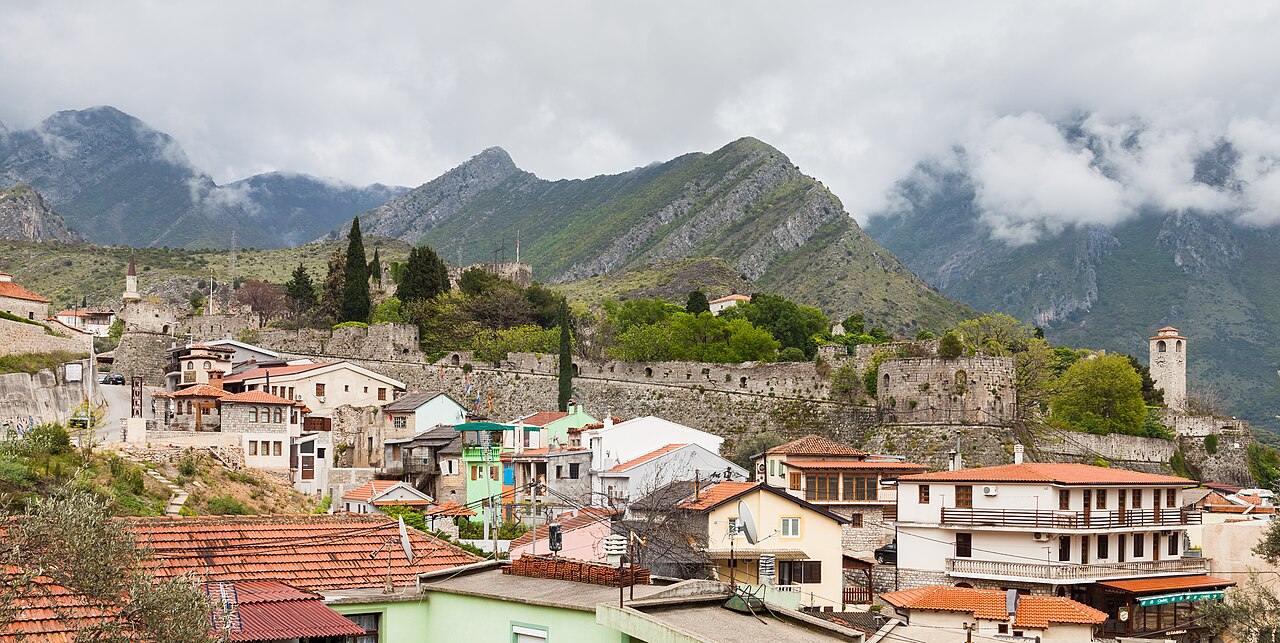
Stari Bar is the best historic stop on Montenegro’s southern coast for travelers who want substantial ruins, layered Balkan history and a slower atmosphere than Kotor or Budva. The fortified old town sits beneath Mount Rumija, about 4 km inland from modern Bar, and works especially well as a half-day visit or as the cultural anchor of a full day combining the fortress, the Old Olive Tree and the Adriatic coast.
By Djokic
The essential plan is simple: arrive in the morning, allow two hours inside the fortified complex, eat in Podgrad below the gate, and add the Old Olive Tree or a coastal stop in the afternoon. This guide explains what matters, how long you need, who Stari Bar suits, and how to avoid turning a rewarding visit into a rushed photo stop.
Is Stari Bar worth visiting?
Yes. Stari Bar is worth visiting if you enjoy historic architecture, viewpoints, archaeology or places where several cultures overlap. Unlike a polished, fully inhabited old town, Stari Bar is an open-air historical complex of stone lanes, roofless buildings, restored monuments, churches, Ottoman structures and fortifications. That difference is its appeal: you are not simply walking through a modern neighborhood in old walls; you are reading the shape of a former city.
It is particularly good for:
- independent road trips along the southern coast;
- couples who prefer a calm cultural stop to a beach-club day;
- families with school-age children who enjoy forts and exploration;
- photographers, especially in softer morning or late-afternoon light;
- travelers combining Bar with Lake Skadar or Ulcinj;
- repeat visitors looking beyond Montenegro’s most famous coastal towns.
Stari Bar is less suitable for anyone with serious mobility limitations. The lanes are uneven, there are steps and slopes, and some surfaces become slippery after rain. It may also disappoint travelers expecting a lively old town full of boutiques. The active neighborhood is Podgrad, immediately below the fortress, while the enclosed historic core is primarily a monument complex.
For context, compare it with the country’s better-known heritage stops. Kotor’s walled old town is inhabited, compact and heavily visited. Budva combines an old town with beaches and nightlife. Stari Bar feels more archaeological, spacious and contemplative. If Kotor is a living medieval maze, Stari Bar is a layered historical landscape.
What exactly is Stari Bar?
Stari Bar, meaning Old Bar, is the fortified predecessor of modern Bar. It stands inland at the foot of Mount Rumija rather than directly beside the sea. Its location reflects the need for defense and control of routes between the Adriatic coast and the interior.
Over centuries, the town passed through different political and cultural worlds. Medieval, Venetian and Ottoman influences are visible in its walls, religious buildings, civic structures and water system. War, bombardment, earthquakes and population movement gradually shifted urban life toward modern Bar near the coast. The old fortified settlement became a monumental complex, while Podgrad below it remained inhabited.
That history is easiest to understand through physical details rather than a list of dates. Look for changes in masonry, reused stone, altered religious buildings, defensive positions and the aqueduct approaching the walls. Stari Bar’s value lies in seeing how a strategic town was adapted repeatedly rather than frozen in one architectural period.
The official complex may change opening hours and ticket arrangements seasonally. Treat any price quoted in an old blog post as provisional and check locally on arrival. The lasting planning fact is that the site needs more time than its size on a map suggests.
How much time do you need in Stari Bar?
Allow three to four hours for Stari Bar and Podgrad, or six to eight hours for a complete Bar-area day. A rushed visitor can see the principal ruins in 90 minutes, but two hours inside the walls is more realistic if you want to pause at viewpoints, read interpretation and explore side paths.
A practical half-day schedule is:
- 09:00–09:30: arrive and walk through Podgrad toward the entrance;
- 09:30–11:30: explore the fortified town;
- 11:30–12:00: inspect the aqueduct viewpoints and lower lanes;
- 12:00–13:30: lunch or coffee in Podgrad.
For a full day, continue to the Old Olive Tree at Mirovica and then choose modern Bar’s waterfront, a beach, or a scenic drive toward Ulcinj. Do not force Stari Bar, Lake Skadar and Ulcinj into one short winter day. Distances look small, but local roads, parking, meals and unplanned stops consume time.
What to see inside Stari Bar
The gate, walls and first ascent
The entrance establishes the character of the visit immediately: stone underfoot, defensive walls above and Mount Rumija behind. Slow down here. The lower approach helps you understand why the town occupied this position and how movement could be controlled.
Once inside, resist the urge to follow only the widest path. Short side turns reveal doorways, fragments of homes and changing views through ruined walls. The complex is most rewarding when treated as a town plan rather than a checklist of individual monuments.
The fortress and panoramic viewpoints
The higher defensive sections provide the clearest overview. From elevated points, you can trace the old settlement, Podgrad and the wider Bar landscape. On clear days, the relationship between mountain, plain and sea becomes obvious.
Take care near exposed stone and edges. Not every picturesque surface is intended as a seat or climbing platform. Good footwear matters more here than fashionable summer sandals, particularly after rain.
Churches and religious layers
Stari Bar contains the remains of several religious structures from different eras. Their condition varies from identifiable buildings to partial walls. Rather than racing between names, observe orientation, arches, surviving decorative details and evidence of rebuilding.
The town’s religious architecture illustrates why simplistic labels fail. Southern Montenegro has long connected Adriatic, Orthodox, Catholic and Ottoman cultural zones. Stari Bar compresses those encounters into one walkable site. Travelers interested in sacred heritage can continue with the broader guide to Montenegro’s Orthodox monasteries, while remembering that Stari Bar itself tells a more mixed urban story.
The aqueduct
The aqueduct is one of Stari Bar’s defining structures because it explains how a fortified hill town obtained water. Its surviving arches are visually striking, but its practical function matters more than the photograph. A defended settlement could not depend casually on access outside its walls.
Views of the aqueduct are often better from lower or outward-looking points than from directly beside it. Morning and late-afternoon light reveal the arches more clearly. Follow marked access and local guidance rather than scrambling for an angle.
Ottoman-era structures and urban remains
A hammam, defensive buildings, storage spaces and domestic ruins reveal daily life beyond churches and battles. These less dramatic remains provide essential context: Stari Bar was a working town of households, trade, craft and administration.
Imagine the spaces at human scale. Where did people collect water? Which lanes carried goods? How did homes fit against walls and slopes? Asking those questions produces a richer visit than photographing every ruin without understanding its role.
The best way to visit Stari Bar Montenegro
The best visit begins early, uses sturdy shoes and leaves enough time for Podgrad. In summer, arriving near opening time reduces heat and makes the stone complex more comfortable. In spring and autumn, later morning can be pleasant, but rain changes the walking conditions quickly.
Bring:
- water, especially from June through September;
- shoes with grip;
- sun protection and a hat;
- a light layer outside midsummer;
- a phone or camera with enough battery;
- cash as a backup for small purchases;
- curiosity, rather than an overpacked schedule.
There may be cafés and restaurants below the walls, but do not rely on finding water at every point inside the complex. Carry what you need without treating the monument as a picnic ground. Follow signs, avoid unstable sections and take all litter out.
A guide can add value if you care about architectural phases or regional history. Independent visitors can still have an excellent experience by reading the onsite interpretation and using a reliable background source before arrival. For broader trip planning, the Montenegro Experience journal connects Stari Bar with coastal, cultural and nature itineraries.
How to get to Stari Bar
By car
Driving is the easiest option. Stari Bar is inland from modern Bar, and the final approach climbs toward Podgrad. Use navigation for the historic complex rather than simply “Bar,” which may direct you to the modern center or waterfront.
Parking arrangements can change with season and demand. Arrive early in high season, park only where permitted, and expect to walk uphill through the lower neighborhood. The approach is part of the experience, not an inconvenience to eliminate.
By taxi
A taxi from modern Bar is practical for travelers arriving by train or bus. Confirm the fare or meter arrangement before departure and decide whether you need a pickup at a fixed time. It is usually better to allow flexibility for lunch than to book a return too tightly.
By local transport
Local bus or minibus options may operate, but frequencies and exact stops can vary. Ask at the Bar bus station, your accommodation or a local tourism office on the day. Do not build a connection-heavy itinerary around an unverified timetable.
From other Montenegro bases
From Budva, Stari Bar can be a rewarding day trip, particularly when paired with a southern coastal drive. From Ulcinj, it offers an easy contrast to beaches and the old town. From Lake Skadar, it can form part of a scenic route depending on your starting village and vehicle access.
Travelers based around Lake Skadar should choose either a boat-focused lake day or a Bar heritage day rather than sacrificing both to transit. Those staying in Kotor should consider an overnight farther south if they also want Ulcinj and the lake. Browse places across Montenegro before fixing the route, because the best base depends on the experiences you prioritize.
Podgrad: do not leave immediately after the ruins
Podgrad, the neighborhood below the fortress, turns Stari Bar from a monument visit into a complete half-day experience. Its lane of restaurants, stone-fronted buildings and small shops creates a gentler transition from the archaeological complex back into contemporary life.
This is the logical place for lunch. Look for regional cooking rather than ordering the same international dishes available in every resort. Depending on the restaurant and season, you may find grilled meat, vegetables, cheese, bread, soups and dishes influenced by both coastal and inland traditions. Ask what is actually prepared that day.
Bar is strongly associated with olives, and the landscape around the old town makes that connection tangible. Local olive oil can be an appropriate purchase, but quality matters more than decorative packaging. If buying food products, ask about producer, harvest and storage. The complete guide to Montenegrin cuisine explains how coastal olive oil fits alongside mountain dairy, cured meat, freshwater fish and Vranac wine.
Be considerate when photographing Podgrad. It is not merely scenery at the entrance to an attraction; people live and work there.
Combine Stari Bar with the Old Olive Tree
The Old Olive Tree at Mirovica is the most natural second stop after Stari Bar. The ancient tree symbolizes Bar’s long olive-growing tradition and gives the day a living agricultural counterpoint to the ruined city.
Allow roughly 30 to 60 minutes depending on transport, crowds and your interest. The point is not to race in for one photograph but to understand why olive cultivation has shaped this area’s food, economy and identity.
A sensible sequence is fortress first, lunch in Podgrad, then the olive tree. In very hot weather, reverse the final two only if opening times and shade make that more practical. Avoid claiming an exact age for the tree as if it were measured like a modern planting record; it is widely described as more than two millennia old, but ancient-tree dating is often presented differently by different sources.
What else can you combine with Stari Bar?
Modern Bar and the waterfront
Modern Bar provides the functional contrast: a port city with broad streets, cafés and a seafront rather than a preserved medieval core. It is useful for travelers arriving by rail and for an easy late-afternoon walk after the old town.
Ulcinj and the southern beaches
Continue south if your priority is a longer regional route. Ulcinj brings a distinct old town and cultural atmosphere, while nearby Velika Plaža changes the landscape completely. Read the Velika Plaža guide before deciding whether the beach suits your season and travel style.
Lake Skadar
Lake Skadar pairs culturally and geographically with Bar, but it deserves its own time. A boat trip, birdwatching and village stops can fill a day. If you have two days, use one for Stari Bar and the coast, then one for the Lake Skadar slow-travel experience.
Cetinje
Travelers building a heritage-focused itinerary can connect Stari Bar with Cetinje on another day. Cetinje explains royal and national history through museums and former diplomatic buildings; Stari Bar explains centuries of contested urban life through architecture and ruins. Together they provide a more balanced picture than the coast alone.
Best time to visit Stari Bar
April to June and September to October offer the best balance of comfortable walking weather, open services and manageable crowds. Summer provides reliable conditions but exposes the stone complex to strong heat. Start early and avoid the middle of the day when temperatures are high.
Winter can be atmospheric and quiet, but rain, wind and shorter opening hours require flexibility. Some nearby businesses may operate reduced schedules. Check the forecast and do not assume every seasonal service is available.
Photographers should favor morning or late afternoon. Midday light can flatten stone textures and create harsh contrast. After rain, colors deepen and the mountain backdrop can look dramatic, but wet paving demands caution.
Common mistakes to avoid
Treating it as a 30-minute stop
The site needs time to make sense. If you have only half an hour, save it for another day rather than reducing Stari Bar to the gate and one viewpoint.
Wearing slippery footwear
Uneven historic stone is not a resort promenade. Proper shoes improve both comfort and safety.
Skipping Podgrad
Leaving immediately after the fortress removes food, local life and context from the visit. Budget time for the lower neighborhood.
Trusting old prices and timetables
Entrance fees, hours and transport change. Verify operational details close to your visit instead of relying on a screenshot from years earlier.
Trying to cover all southern Montenegro in one day
Stari Bar, Ulcinj, Velika Plaža and Lake Skadar each deserve attention. Choose one main experience and one or two compatible additions.
Ignoring heat and water
Stone, elevation and limited shade make summer visits more demanding than the distance suggests. Carry water and start early.
A practical one-day Stari Bar itinerary
For most first-time visitors, the ideal day combines Stari Bar, Podgrad, the Old Olive Tree and modern Bar’s waterfront. It delivers history, food, landscape and an easy coastal finish without excessive driving.
- 09:00: arrive at Stari Bar;
- 09:15–11:30: explore the fortified town and viewpoints;
- 11:30–12:00: walk the lower approach and aqueduct viewpoints;
- 12:00–13:30: lunch in Podgrad;
- 14:00–15:00: visit the Old Olive Tree area;
- 15:30 onward: continue to modern Bar for coffee and a waterfront walk, or head to a nearby beach in warm weather.
Families may shorten the ruins section and lengthen lunch. Architecture enthusiasts should do the opposite. If arriving by train, use taxis strategically and leave a generous buffer before the return departure.
Frequently asked questions
Is Stari Bar the same as Bar Old Town?
Yes. Stari Bar means Old Bar and refers to the historic fortified settlement inland from modern Bar.
Is Stari Bar near the beach?
Not directly. The old town stands several kilometers inland beneath Mount Rumija. Combine it with the modern Bar waterfront or a beach by car or taxi.
Can you visit Stari Bar without a car?
Yes. Reach modern Bar by bus or train, then use a taxi or verify local transport to Stari Bar. A car is convenient but not essential.
How long should I spend inside the fortress?
Allow about two hours for a comfortable first visit. Add more time if you are interested in photography, archaeology or detailed interpretation.
Is Stari Bar good for children?
It can be excellent for school-age children who like forts and ruins, provided adults supervise them closely on uneven surfaces and near exposed areas. A stroller is impractical in much of the complex.
What should I wear?
Wear shoes with grip and season-appropriate sun or rain protection. There is no need for technical hiking equipment for a normal visit, but beach footwear is a poor choice.
Can I combine Stari Bar and Ulcinj in one day?
Yes, especially by car, but prioritize. Explore Stari Bar in the morning, have lunch, then choose Ulcinj Old Town or the beach rather than attempting every southern-coast attraction.
Where to go next
Stari Bar earns its place in a Montenegro itinerary because it offers something the famous northern coast does not: a spacious ruined city where medieval, Venetian and Ottoman layers can be read against olive country and Mount Rumija. Give it a morning rather than a quick detour, stay for Podgrad, and pair it with one thoughtful nearby stop.
Next, compare southern options on the Ulcinj destination page, explore bookable ideas in Montenegro experiences, or use the journal hub to build a route through Lake Skadar, Cetinje and the coast.
Image attribution: “Stari Bar, Montenegro, 2014-04-18, DD 03” by Diego Delso, via Wikimedia Commons, licensed under CC BY-SA 3.0. The published web image is resized and converted for delivery.