Driving in Montenegro is the best way to reach mountain viewpoints, remote villages, national parks and quiet parts of Lake Skadar, but it is not essential for every trip. A car makes the most sense if you plan to combine the coast with places such as Lovćen, Durmitor or the villages around Lake Skadar. If your holiday is mainly Kotor, Perast and Budva, buses, boats and occasional transfers can be easier than dealing with summer traffic and parking.
This guide explains the decision before the rules: whether you need a car, what kind to rent, where driving feels easy or demanding, how parking works and which routes deserve extra time. It is for visitors hiring a car in Montenegro as well as travelers arriving in their own vehicle. Regulations and rental conditions can change, so confirm licence, insurance and border requirements with your rental company and an official travel source before departure.
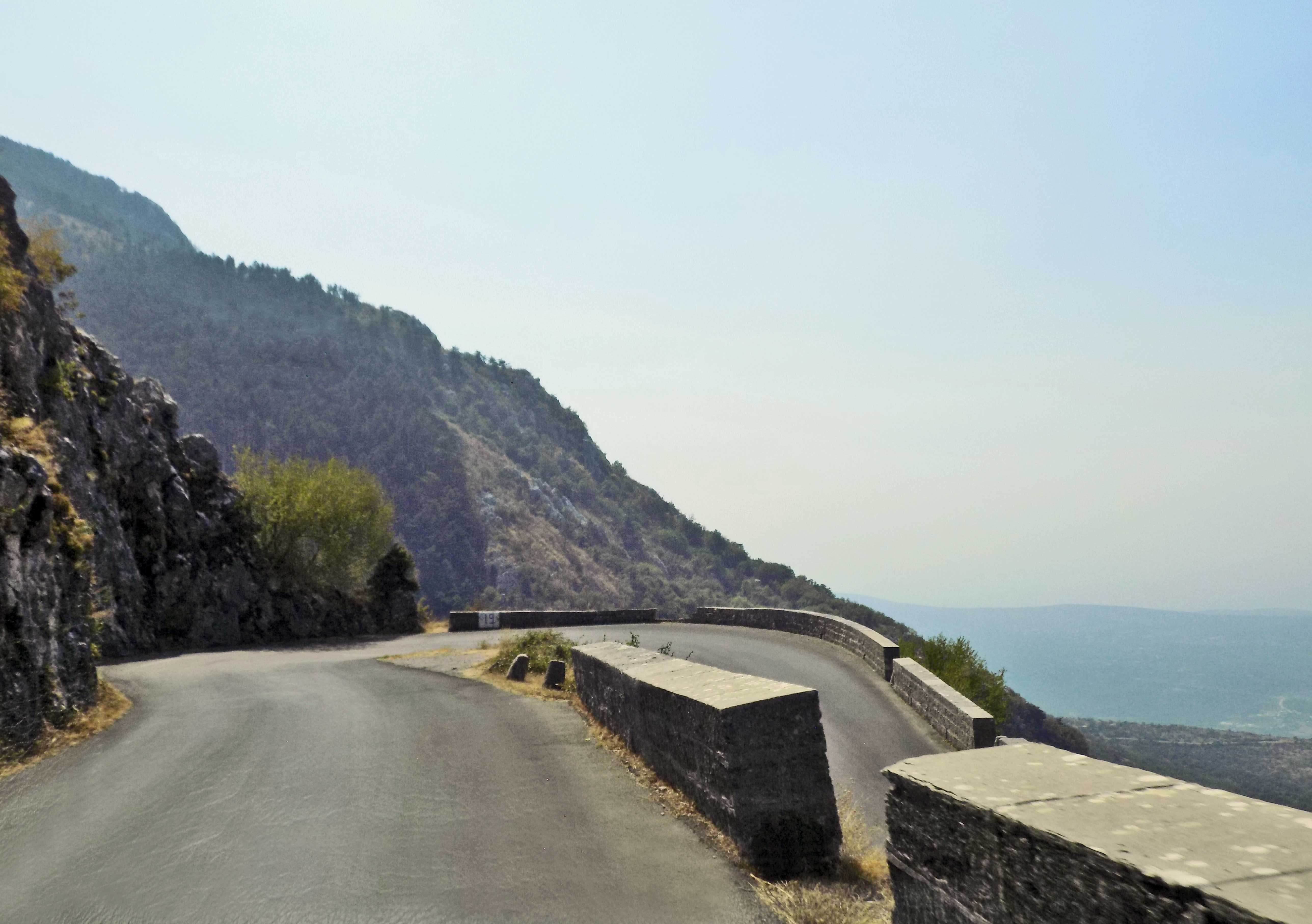

Is driving in Montenegro a good idea?
Driving in Montenegro is a good idea for confident drivers who want an inland, mountain or multi-stop itinerary; it is less useful for a coast-only break. The country is compact on a map, yet mountains, narrow roads and seasonal congestion make journeys slower than distance alone suggests.
Choose a rental car if you want to:
- stay in rural guesthouses or wine villages;
- reach trailheads, viewpoints and national-park stops independently;
- combine several regions without returning to Podgorica for connections;
- travel with children, sports equipment or substantial luggage;
- start early and avoid the schedule of an organized tour.
Consider traveling without a car if you:
- plan to stay in one or two well-connected coastal bases;
- feel uncomfortable reversing on narrow roads or driving around blind bends;
- are visiting Kotor or Budva in peak summer and your accommodation has no parking;
- want to relax rather than concentrate on road conditions;
- plan to drink wine or rakija with meals.
For a realistic car-free alternative, use our seven-day Montenegro itinerary by public transport. If you do rent, the Montenegro road trip itinerary shows how to combine the Bay of Kotor, Lake Skadar, Cetinje, Durmitor and Budva without changing hotels every night.
Driving in Montenegro: essential rules at a glance
Montenegro drives on the right, vehicles overtake on the left, and dipped headlights should be used during the day. Seat belts are required, mobile-phone use while holding the device is not allowed, and the alcohol limit is low enough that the sensible travel rule is not to drink before driving.
Keep these fundamentals in mind:
- Follow posted limits rather than assuming one national limit applies everywhere.
- Use dipped headlights during daylight as well as after dark.
- Wear seat belts in front and rear seats.
- Give yourself more stopping distance on wet, steep or unfamiliar roads.
- Do not use a handheld phone while driving.
- Carry your licence, passport or accepted identification, rental agreement and insurance documents.
- Check child-seat requirements before collecting the vehicle.
- Call 112 for a general emergency.
The UK government’s Montenegro safety and security advice lists local emergency and roadside-assistance information, while the RAC Montenegro driving guide provides a useful checklist for road rules and documents. These are planning references, not substitutes for the current instructions of Montenegrin authorities, your insurer or your rental company.
Licence and International Driving Permit questions
The right document depends on where your licence was issued, how long you are staying and what the rental provider accepts. A full photocard licence from many European countries is commonly accepted, but visitors with licences in other scripts or from other jurisdictions may need an International Driving Permit or certified translation.
Do not rely on a forum answer for this. Ask the rental company in writing whether your exact licence is accepted and whether an additional permit is required. Save the reply offline. If you are driving your own vehicle, confirm that your registration and insurance are valid in Montenegro and in every transit country.
Crossing into Croatia, Bosnia and Herzegovina or Albania
A Montenegrin rental car is not automatically authorized for every border. Tell the company your intended countries before booking, request written cross-border permission and check whether an extra fee or insurance document applies. The same principle applies to taking the Kamenari–Lepetane ferry or returning the car in another country: never assume the base rate includes it.
Border queues can become long in summer. Avoid planning a flight immediately after an international crossing, and never hide a border trip from the rental provider; doing so can invalidate cover when you need it most.
What kind of rental car should you choose?
A small or medium car is usually the best rental car for Montenegro. It is easier to place on narrow roads, reverse into a passing space and park in compact coastal towns. Most mainstream visitor routes are paved, so a large SUV is not necessary simply because Montenegro is mountainous.
Prioritize these features:
- A size you can confidently maneuver. A smaller body is often more valuable than extra ground clearance.
- Enough engine power for steep roads. Ask about the actual model or category rather than booking the cheapest possible car blindly.
- A transmission you can drive comfortably. Automatics are available but may be limited, particularly in high season; reconfirm if automatic transmission is essential.
- Clear insurance terms. Understand the excess, deposit, tyre and glass cover, roadside assistance and exclusions for unpaved roads.
- Air conditioning. This matters on the coast in summer.
Photograph every side of the car, the wheels, windscreen, fuel gauge and dashboard before leaving the collection point. Make sure existing damage appears on the rental report. Repeat the process at return and retain the final paperwork. If the office proposes an unfamiliar insurance waiver, ask what is already included and what financial exposure remains rather than agreeing under time pressure.
Airport rental or city rental?
Podgorica Airport generally suits itineraries heading toward Lake Skadar, Cetinje or the north. Tivat Airport is more convenient for the Bay of Kotor and the central coast. However, collecting immediately after a tiring flight can be a poor choice if your first drive involves darkness, rain or a congested road around Kotor.
Compare the total plan, not only the daily rate. A transfer to your first base followed by a shorter three-day rental can cost less—and feel easier—than paying for a parked car for a full week. The guide to choosing between Tivat and Podgorica airports helps match your arrival point to your route.
What are Montenegro’s roads really like?
Main roads between Podgorica, the coast and major towns are generally straightforward, but scenic and mountain roads can be narrow, steep and slow. Expect bends, tunnels, changing surfaces, limited shoulders and occasional animals or cyclists. Local drivers may overtake more assertively than you expect.
The safest response is not to copy the fastest driver behind you. Maintain a speed that lets you stop within the visible road, use a legal pull-off when available and let impatient traffic pass. Do not stop on a blind corner for photographs. Google Maps can suggest a road that is technically passable but unsuitable for an unfamiliar driver, so ask your host about the final approach to rural accommodation.
The Bay of Kotor and the coastal road
The coastal corridor connects Herceg Novi, Kotor, Budva, Bar and Ulcinj, but summer traffic can erase the impression that these places are close. Around Kotor, a short distance may take much longer when cruise traffic, beach traffic and local commuting overlap. Add a buffer before tours, restaurant reservations and flights.
The Kamenari–Lepetane ferry can shorten a journey across the bay by avoiding the full loop through Kotor. Whether it saves time depends on your origin, destination and queue. If the drive itself is the purpose, the full bay route rewards you with Perast and waterside scenery. Read the destination pages for Kotor and Perast before choosing where to stop; both old-town areas are better explored on foot after parking outside their historic cores.
Lovćen and the old Kotor road
The historic road between Kotor and Lovćen is famous for its hairpins and huge views. It is also a road where the driver must watch the carriageway rather than the panorama. Some sections are narrow, meeting larger vehicles can require patience and temporary traffic controls may apply. Check current local conditions before setting out.
If you dislike exposure, tight bends or reversing, take a tour or approach Lovćen by an easier route. Confident drivers should travel in daylight, avoid rushing and stop only in designated areas. Combine the mountain with Cetinje for a balanced day of scenery and cultural history rather than turning the drive into a speed challenge.
Lake Skadar roads
The Virpazar area is accessible from major roads and by train, but the lake’s villages and viewpoints are dispersed. A car is valuable for travelers who want to move beyond a single boat trip. Narrow local roads demand low speed, especially near bends and settlements.
Avoid building a day around too many pins. Choose one boat experience, one village or viewpoint and one meal. The Lake Skadar destination guide explains the region, while the Lake Skadar slow-travel guide is useful if you would rather stay overnight than race back to the coast.
Durmitor and northern Montenegro
A car gives the greatest practical advantage in the north. It lets you reach the Durmitor Ring, trailheads and viewpoints early, but weather can change rapidly and navigation estimates do not account for repeated photo stops or slow vehicles.
Fuel before remote loops, carry water and download an offline map. Ask locally about road condition, snow and seasonal closure. A road that is easy in July may be unsuitable after an autumn storm or in winter. Explore the Durmitor National Park destination page before fixing a route, and do not treat an ambitious drive as a substitute for proper hiking preparation.
Parking in Kotor, Budva, Perast and other busy places
The simplest Montenegro parking strategy is to choose accommodation with confirmed private parking and leave the car outside pedestrian old towns. Parking is most difficult on the coast in July and August, especially near Kotor Old Town, Budva Old Town, Perast and popular beaches.
Ask accommodation hosts four precise questions before booking:
- Is the space private or merely public street parking nearby?
- Is a reservation possible?
- Can the space fit your vehicle?
- Must another guest move their car before you can leave?
A listing that says “parking available” does not always mean a guaranteed space. In steep settlements, the parking spot may also be several flights of stairs from the room.
Kotor parking
Do not attempt to drive into the walled Old Town. Use a marked lot outside it and arrive early during cruise and summer peaks. If you are staying in Dobrota or another nearby settlement, walking or using a taxi may be easier than moving the car twice. Never leave luggage visible in the vehicle.
Perast parking
Perast’s historic center has restricted vehicle access during busy periods. Park in an official area at the edge of town, confirm the price before leaving the vehicle and walk along the waterfront. A local bus or boat visit from Kotor may be more relaxing than driving if Perast is your only stop.
Budva and beach parking
Budva has more parking supply than tiny historic settlements, but demand is also high. A hotel outside the center with a real parking space can be more convenient than a central room that forces you to search each evening. For beaches, use signed lots and verify the day rate. Do not block gates, sidewalks or narrow access lanes even if other cars are doing so.
Parking payments and fines
Payment systems vary by municipality and facility. Some spaces use attendants, barriers, tickets or local mobile-payment instructions. Visitors with foreign phone numbers should not assume every SMS system will work. Read the sign, retain the ticket and ask a local business if the wording is unclear.
If a rental car receives a fine, the rental company may add an administration charge. Photograph the parking sign and your ticket when rules are ambiguous, but do not use uncertainty as permission to park illegally.
Tolls, fuel and practical road planning
Montenegro has no nationwide vignette for ordinary tourist driving, but individual infrastructure such as the Sozina Tunnel and sections of motorway can have tolls. Carry a payment card and some euros rather than relying on one method. Toll amounts and accepted payment methods can change.
Fuel stations are easy to find around cities and main roads, but gaps become less comfortable on mountain routes. Refill before a remote loop instead of waiting for the warning light. Confirm whether your rental takes petrol or diesel and photograph the fuel label if there is any doubt.
A realistic driving day includes more than map time. Add time for:
- slow traffic and roadworks;
- finding a legal parking space;
- viewpoints and rest breaks;
- queues at borders or ferries;
- weather changes in the mountains;
- returning the rental and refueling before a flight.
Two hours of mountain driving can be more tiring than two hours on a motorway. Share driving where the rental agreement allows it and stop before concentration fades.
Best scenic drives—and who should avoid them
Montenegro’s scenic roads are rewarding because they connect distinct landscapes, not because they let you cover the country quickly.
Kotor–Lovćen–Cetinje
Best for dramatic views, history and travelers comfortable with hairpins. Avoid the old road if tight bends make you anxious; choose another approach or a guided excursion. Allow a full day if adding the mausoleum and Cetinje.
Lake Skadar viewpoints and villages
Best for slow travel, photography, food and bird-rich landscapes. Avoid an overpacked circuit. Roads can be narrow, and stopping places are limited. Virpazar is a practical gateway, but the lake deserves more than a rushed photograph.
Durmitor Ring
Best for summer mountain scenery and independent road trippers with flexible timing. Check snow and road conditions outside the core summer season. Start with fuel, food, water and daylight to spare.
Herceg Novi to Ulcinj
Best for comparing the character of Montenegro’s coast, but not as a single hurried day. Traffic around Kotor and Budva can make the journey tiring. Break the route with overnight stays or select one coast section rather than trying to collect every town.
Browse the main Montenegro places hub to choose stops by region, and use the Montenegro journal for deeper itineraries and seasonal advice. Those two hub pages are more useful than adding random map pins until each day becomes unmanageable.
Common mistakes when renting and driving in Montenegro
Booking the biggest vehicle
Large cars feel protective but become awkward on narrow streets and mountain roads. Choose the smallest vehicle that comfortably fits passengers and luggage.
Trusting map times exactly
A distance can be short and still involve traffic, switchbacks or a ferry queue. Build margins, especially for flights and fixed-time activities.
Assuming “parking available” means guaranteed parking
Confirm ownership, reservation rules and exact location with your host before booking.
Starting a difficult road after dark
Collecting a car late and immediately tackling an unfamiliar mountain approach adds avoidable risk. Sleep near the airport or arrange a transfer when necessary.
Ignoring rental exclusions
Cross-border driving, ferries, unpaved roads, tyres, glass and additional drivers may require specific permission or cover. Read the agreement before paying.
Trying to see the whole country in three days
A car increases access, not the number of useful hours in a day. Base yourself in one region and make fewer, better stops.
A practical decision: car, bus or hybrid trip?
For many first-time visitors, the best option is a hybrid itinerary: travel without a car in Kotor or Budva, then rent one for Lake Skadar, Lovćen or Durmitor. This reduces parking costs while preserving access to the places where independent transport is genuinely valuable.
A simple seven-day model could be:
- Days 1–3: stay in Kotor; walk, take a boat and use local buses for Perast.
- Day 4: collect a rental and visit Cetinje or Lovćen.
- Day 5: continue to Lake Skadar or the north.
- Days 6–7: explore Durmitor, then return via Podgorica Airport.
Reverse the route if flights favor Podgorica on arrival and Tivat on departure, but check one-way fees before assuming that an open-jaw rental is economical.
Frequently asked questions about driving in Montenegro
Is it easy to drive in Montenegro?
Driving is manageable for confident visitors on main routes, but narrow mountain roads, coastal congestion and scarce parking can be demanding. First-time drivers should plan short daylight stages and avoid blindly following minor-road shortcuts.
Do you need a car in Montenegro?
No. Kotor, Perast, Budva, Bar and Ulcinj can be combined by bus, while tours cover popular inland day trips. A car becomes most valuable for Durmitor, rural Lake Skadar, remote accommodation and flexible multi-region routes.
What side of the road does Montenegro drive on?
Vehicles drive on the right and overtake on the left.
Are roads in Montenegro safe?
Major roads are generally usable, but conditions vary. Mountain roads may have tight bends, limited shoulders, animals, poor weather or seasonal closures. Drive according to visibility and conditions, not pressure from faster traffic.
Is parking difficult in Montenegro?
Parking is difficult in the most popular coastal towns during summer, especially Kotor, Perast and Budva. Reserve accommodation with confirmed parking, arrive early and use marked lots outside historic centers.
Do I need an International Driving Permit?
It depends on the issuing country and rental company. Ask the provider in writing about your exact licence and check current official guidance before travel.
Can I take a Montenegro rental car across the border?
Often yes, but only with the rental company’s permission and required insurance or paperwork. Declare every intended country before booking and account for possible fees and border queues.
Is a 4×4 necessary?
Not for standard visitor routes in normal conditions. A compact or medium car is usually easier to maneuver. Specialized or winter journeys require a route-specific assessment rather than an automatic SUV upgrade.
Plan the route, then decide whether to rent
The right question is not simply “Should I rent a car in Montenegro?” It is “Which days of my itinerary genuinely become better with a car?” Keep the vehicle for mountain roads, lake villages and flexible regional connections; skip it when you are walking through old towns or staying beside a crowded summer waterfront.
Start with the places directory, choose two or three priority regions, and check the broader journal planning guides before reserving a vehicle. If driving unlocks those priorities, rent a small, well-insured car, confirm the documents and parking, and leave generous time. If it does not, buses, boats, transfers and selected tours can produce a calmer—and often better—Montenegro trip.